Righteousness by Faith in Verity: Part 3
Covered, Empowered and Changed

A saying commonly attributed to Martin Luther captures a profound truth: “When I look at myself, I don’t see how I can be saved, but when I look at Christ, I don’t see how I can be lost.”1 Sin is not merely a violation of a relational covenant between God and man; it alienates us from God and deeply corrupts our whole constitution—mind, body, and soul. It turns us into enemies of God and makes us outlaws against the government of God. Therefore, we stand condemned before the tribunal of Heaven. This is no small thing; the principles of righteousness—the just law of love—demand justice. And there is only one just punishment: the death of the violator. For to be in harmony with God is life; to transgress the law and alienate oneself from Him is to accept death. In the light of all this, we ask, what hope have we? Since we have all transgressed and stand condemned before the bar of Heaven, and since we are all corrupt and dysfunctional to the core, whether we admit it or deny it, what then? Are we a lost case?
Thanks be to God, who is not only just but also merciful. There, before the throne of the Father, stands One who is the Mediator of mankind. Through Christ, the Godhead offers us both justification and purification. As lawbreakers, He pleads on our behalf by virtue of His having taken upon Himself our rightful punishment. And by the merits of His purity, He offers us a clean and new record—free of guilt, free of shame, and freed from the punishment of our wrongs. In Christ, we are fully forgiven and completely accepted. By virtue of His sacrifice, when we come before God with repentant hearts and with faith in the complete work of Christ, we are fully justified.
One can be released from the burden of guilt and shame, and the just punishment for their wrongs can be lifted—taken by another; yet without the acknowledgment and acceptance of this gift of love and mercy, we will still bear it all. Faith, then, is not merely being convinced of the absolute truth of this reality, nor merely trusting in it; it is the acceptance of that truth and a complete reliance upon it, embracing all that it entails.

Empowered and changed
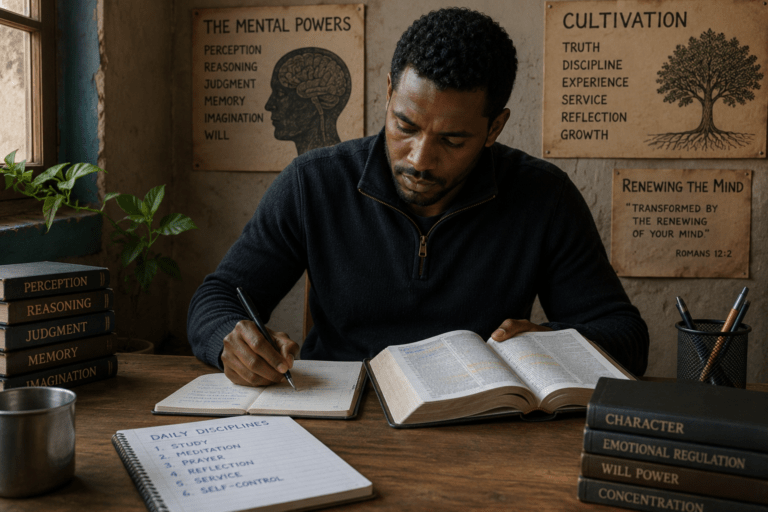
Justifying a criminal does not change the heart of a criminal; it only changes his legal status—he remains a criminal at heart. The real struggle is that even if he ceases to commit acts of crime, mentally he still processes reality through the lens of a criminal. Only when that criminal has a genuine change of mind, a complete transformation, and a reorientation of the will does anything truly change. What then? What about the filthiness of our hearts—the inherited and cultivated tendencies and inclinations toward wrong? What about the psychological dysfunctions and scars? What about the traumas, the brokenness as a result of all mayhem and chaos in this fallen world? Psychology is good at tracing and defining the mental mechanisms of change, but only Scripture truly reveals the core of the problem. It is true that changing how one thinks is key, yet no one really speaks about the impossibility of regenerating righteous thinking patterns, and our inability to suppress inherent habits, and propensities and to regulate emotions, passions, and appetites that have been allowed to tread on forbidden ground for centuries. Through Christ, not only are we empowered to overcome the corruption within our minds, but we are gradually changed, and this work continues until there is no trace of corruption. Through Christ, we are offered not merely the modification of behavioral patterns, but the transformation of the underlying nature and motive power of the heart. In Him, divine power is freely given for us to engage in the struggle with the sin problem in all its aspects. God is not only offering us comfort, but healing from our mental, physical, and spiritual brokenness.
Herein we see Christ covering our unrighteousness with His righteousness, empowering human frailty with His divine power, and changing our vile natures into His holy and pure nature. Our righteousness is Christ in verity; He is our all in all. Through Him, our guilt is removed, our shameful past and present shortcomings are forgiven, and our weakness and inherent defects are transformed into His spotless nature. Christ is not merely the means—He is righteousness itself. Apart from Him, we remain condemned, powerless, and unchanged; in Him, we are covered, empowered, and made new. There is no middle ground—either Christ is our all, or we have nothing.
References
- “When I look at myself, I don’t see how I can be saved; when I look at Christ, I don’t see how I can be lost.” — Attributed to Martin Luther; however, no primary source has been identified in his extant writings.