Righteousness by Faith in Verity: Part 1
HUMAN NATURE IN ITS PRIMITIVE STATE
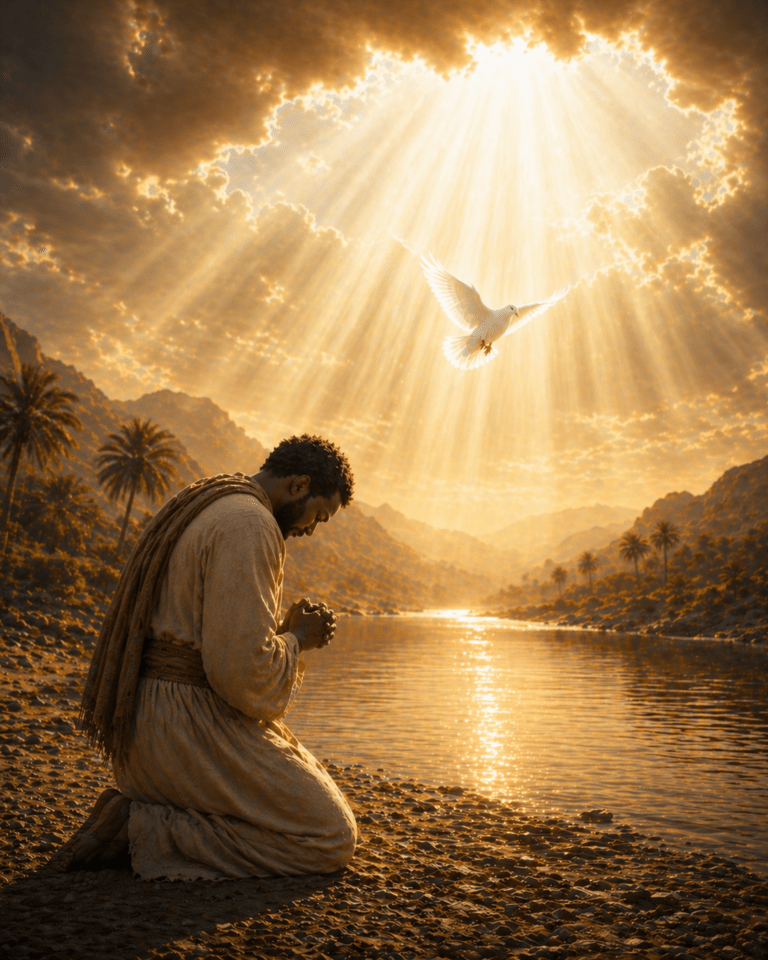
Made in the likeness and image of God.
One of the most fascinating sciences to engage one’s mind in is the creation of mankind, specifically the nature of mankind. It is mind-boggling to think that though mankind claims to have greatly advanced in the sciences and technology, yet most of us still lack the most essential knowledge. To put it more plainly, the majority of us are still confused and deluded about our origins and our true nature; we are in the dark concerning our primitive nature and its current condition. This is sad; it is a disaster, in that the Maker of mankind has not left mankind in ignorance to wander about the dark forests of erroneous theories concerning our origins and nature; we have rejected the truth and turned our backs towards Him. We have forsaken the way of life and all that which pertains to life and godliness.
“And God said, Let us make man in our image, after our likeness…” Genesis 1:27. This is one of the most profound and grounding passages in the Scriptures; it is a light shining before our path, giving us the very blueprint of our life-vision and purpose. What then does it mean to be made in the image and likeness of God? This is a pillar of truth concerning our nature, one that has been greatly misunderstood, twisted, and discarded. “Man was to bear God’s image, both in outward resemblance and in character. Christ alone is ‘the express image’ (Hebrews 1:3) of the Father; but man was formed in the likeness of God. His nature was in harmony with the will of God. His mind was capable of comprehending divine things. His affections were pure; his appetites and passions were under the control of reason. He was holy and happy in bearing the image of God and in perfect obedience to His will.”1 Dr. Alberto Timm & Dwain Esmond, commenting on the above quoted verse and commentary, writes “At the very beginning of the Bible one encounters the description of Adam and Eve being made in the image of God (Gen. 1:26, 27). In Ellen White’s commentary on this Creation account, she writes that “man was to bear God’s image, both in outward resemblance and in character.” There has been much discussion regarding the imago Dei, or “image of God.” Genesis 1:27 states the divine deliberation: “Let us make man in Our image, after Our likeness.” In my examination of the Hebrew text of Genesis 1:27, I have found that the two words translated “image” (tselem) and “likeness” (demut), while overlapping in semantic range, tend to emphasize different aspects. A study of the use of these two terms in Scripture reveals that tselem, “image,” emphasizes the external, concrete form, whereas demut, “likeness,” emphasizes the inward, abstract character qualities, and when juxtaposed, as in Genesis 1:27, the two terms denote both external form and inward characteristics.”2
This truth, in its breadth, depth, and width, is beyond what our finite minds can fully process and understand. Yet we can safely meditate on and understand, to a certain extent, what is revealed herein. To be honest, the meaning of having the same outward resemblance as God is a bit too great for my finite mind, but I cannot help thinking about the beauty of the first human beings; by that I’m referring to their outward features that were amazingly, symmetrically pleasing to the eye, and unimaginably stimulating to the brain. Then the character—imagine the thoughts that are in perfect harmony with the will of God, the feelings that are perfectly regulated and in harmony with the heart of the Divine. The mind that does not wrestle in vain with divine subjects but rather understands easily the thoughts of God and His operations. Pure affections, appetites, and passions that never run wild, nor have a slight inclination towards corruption. Genetically and neuronally perfect. Fearfully and wonderfully made was mankind when he came forth from the hand of his Creator.

HUMAN NATURE IN ITS PRESENT STATE
Fallen from his high estate.
“Lo, this only have I found, that God hath made man upright; but they have sought out many inventions.” Ecclesiastes 7:29. The Scriptures carry a deep, dark record concerning the present state of humanity; we have fallen so far from our high and holy estate. The most horrifying thing about this is that we are in denial of this truth, and sadly, even when we acknowledge it, we are incapable of redeeming ourselves. The record is “The fool hath said in his heart, There is no God. Corrupt are they, and have done abominable iniquity: there is none that doeth good. God looked down from heaven upon the children of men, to see if there were any that did understand, that did seek God. Every one of them is gone back: they are altogether become filthy; there is none that doeth good, no, not one.”Psalm 53:1-3. Originally, our thoughts were in harmony with God’s will; now we have been so far removed from Him that not only are our minds contrary to His will, but we deny His very existence. In the beginning, we were made capable of comprehending spiritual things; now we not only deny the existence of spiritual truths, but we refuse the very act of listening to anything spiritually related. We ridicule and attempt both verbally and physically to destroy anything that suggests the existence thereof. From the very beginning of time, humankind chose to believe a lie: thinking that we can reach the level of deity and possess supreme knowledge and wisdom independently of God. We sought to obtain immortality apart from the source of life.
The sinfulness of sin.
There are only two definitions of sin in the Bible. The first and decisive one reads thus: “sin is the transgression of the law.” 1 John 3:4. The second one states that “whatsoever is not of faith is sin.” Romans 14:23. Now the Bible is also clear that God’s law is the law of love. Jesus made this very clear when He stated that the whole law hinges on love supreme to God and love impartial to our fellow men. Furthermore, it is written in 1 Timothy 1:5 that the goal of the law is love; that is the destination. The very essence of the law is to express love. If this be the case, then we can safely conclude that transgressing the law is a violation of a relational covenant that was founded on love. What did this violation produce? Not only a broken relationship, but it warped the whole constitution of the one created to find his happiness and the satisfaction of his needs in love. When mankind refused to submit to God’s authority, we attempted to efface Him in our minds; we violated every law He established for our health and well-being; therefore, we corrupted every aspect of our nature, from the genetic level to the neuronal level. Chun and Fay (2009) state that “Each human carries a large number of deleterious mutations. Together, these mutations make a significant contribution to human disease.”3 Clearly, we carry in our systems serious markers of what the entrance of sin has brought upon the human race. Concerning our minds, the Scriptures clearly state, “The heart is deceitful above all things, and desperately wicked: who can know it?” Jeremiah 17:9. These “deleterious mutations,” or corrupted genes, were never originally a part of our makeup; we know this, for the record is: “And God saw everything that He had made, and, behold, it was very good.” Genesis 1:31. Our nature is so perverted by both inherited and cultivated wrong practices that our mindsets and lifestyles, apart from God, can only produce disease and death. We are in a wretched state, a condition that we have no power at all to change. In and of ourselves, we are helpless and hopeless, incapable of changing our fate.
Regeneration.
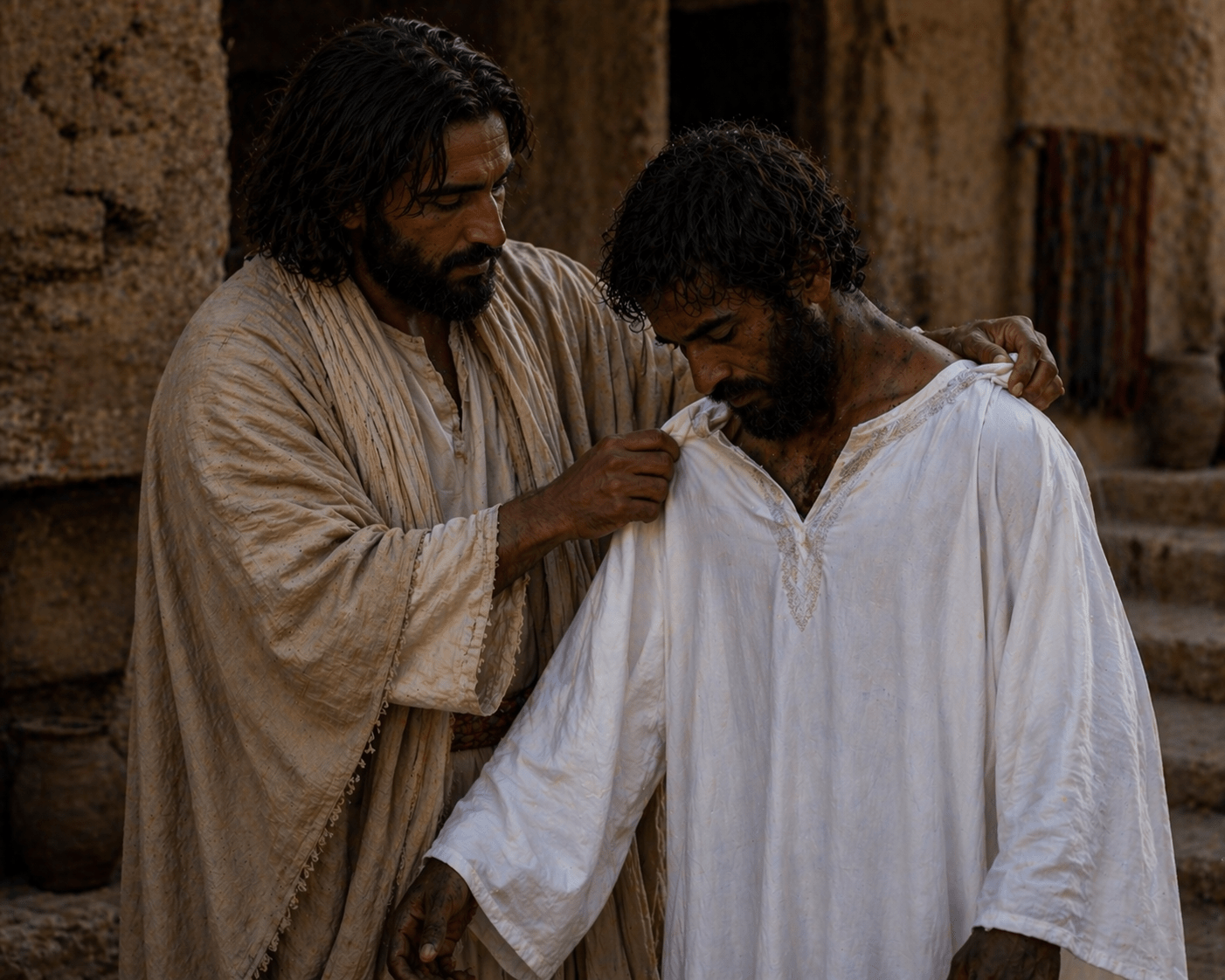
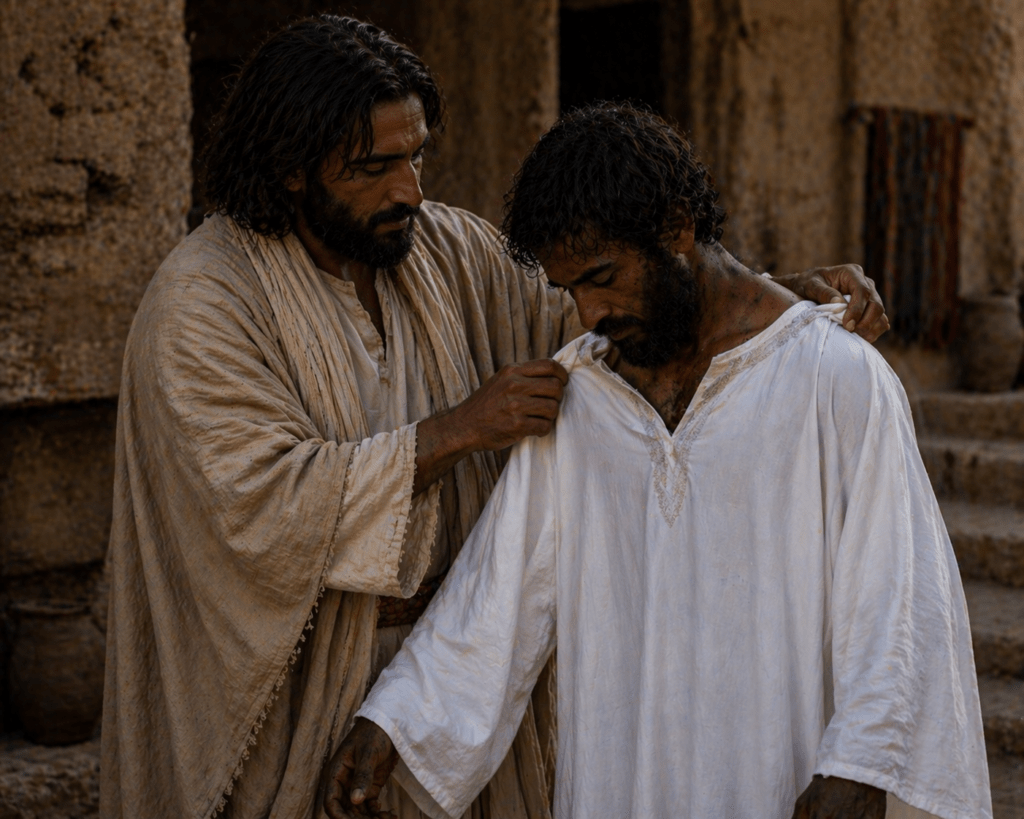
Isaiah, speaking of Christ, declared,“The Spirit of the Lord GOD is upon me; because the LORD hath anointed me to preach good tidings unto the meek; he hath sent me to bind up the brokenhearted, to proclaim liberty to the captives, and the opening of the prison to them that are bound; To proclaim the acceptable year of the LORD, and the day of vengeance of our God; to comfort all that mourn; To appoint unto them that mourn in Zion, to give unto them beauty for ashes, the oil of joy for mourning, the garment of praise for the spirit of heaviness; that they might be called trees of righteousness, the planting of the LORD, that he might be glorified.” Isaiah 61:1-3. “Our Lord Jesus Christ came to this world as the unwearied servant of man’s necessity. He “took our infirmities, and bare our sicknesses,” that He might minister to every need of humanity. Matthew 8:17. The burden of disease and wretchedness and sin He came to remove. It was His mission to bring to men complete restoration; He came to give them health and peace and perfection of character.”4
Though wretched and hopeless in ourselves—that is, in everything we are and have; all is useless when it comes to our deliverance—but thanks be to God through Christ, for in Him our salvation and regeneration are sure. God is able to save us to the uttermost through Christ, when we turn to God. Hebrews 7:25. This is the most glorious truth we have ever known: that the Creator of mankind is also the Recreator. Who else is better fitted to restore us to our primitive state? He alone is able to deliver us from the power, the consequences, the punishment, and the presence of sin. God alone is able to restore us completely.
This is the truth we will now explore—examining it carefully, and tracing it to its very depth. The regeneration of fallen man— is it truly possible that God can…?
References
- Ellen G. White, Patriarchs and Prophets, p. 45, par. 2.
- Alberto R. Timm and Dwain N. Esmond, The Gift of Prophecy, p. 157, par. 2.
- Chun, S., & Fay, J. C., “Identification of deleterious mutations within three human genomes,” Genome Research 19, no. 9 (2009): 1553–1561. https://doi.org/10.1101/gr.092619.109
- Ellen G. White, The Ministry of Healing, p. 17, par. 1.