
A Deception Woven Into Identity

Throughout the ages, cultures have risen and fallen; social customs and norms have apparently come and gone. But really, has anything changed since the dawn of time? Are we making progress, or simply modifying past inventions and modernising old habits? Think about it. Culture, for instance—what is culture? What is its formation, its progression, and its essence?
The concept of culture is an interesting one that has evolved, expanded, and been redefined over the ages, and one that we often use very carelessly without considering its deep import. Culture itself is very shallowly understood and lightly regarded, especially its effects upon human nature and our relationship with God. Culture is not merely a way of life for a certain group of people; it is the cultivation of character. It determines how we view the world, and it shapes our beliefs and conduct to the core. We are not merely participants in it, but our very identity is found in it. In the beginning, mankind’s culture was the way of Truth, the way of God. They were to live in harmony with the will of God, and their identity was to be found in Him as revealed in the principles of His law. But Eve consented to another way of life, Adam followed, and Cain established it. A culture founded upon self rather than divine principles; a human-centered identity independent of God. We started either creating gods and idols after our own image, or directly deifying man himself. This is a way of life that glorifies the violation of God’s law and denies His revealed will, defiantly asking, “Hath God said?” (Genesis 3:1) and asserting that, “God doth know that in the day ye eat thereof, then your eyes shall be opened, and ye shall be as gods, knowing good and evil.” (Genesis 3:5). Historically, many cultures have indeed worshipped human rulers, exalted ancestors, elevated philosophers, glorified heroes, or treated humanity itself as the highest authority. Whether through idols or ideologies, the tendency is similar. Up to this day, humanity refuses to acknowledge the sovereignty of the true God who has revealed Himself through the Bible, and more so in the Person of His Son, Jesus Christ. As a result of denying God, we seek to fill the visible gaps created by our separation from Him. When God is removed from the picture, there are visible gaps, such as the spiritual gap, the moral gap, the existential gap, and the relational gap. As a result of these, we create gods of the gaps and try to satiate our consciences by setting ourselves up as gods and creating idols after our own image to suit the tenor of our minds and satisfy our desires.
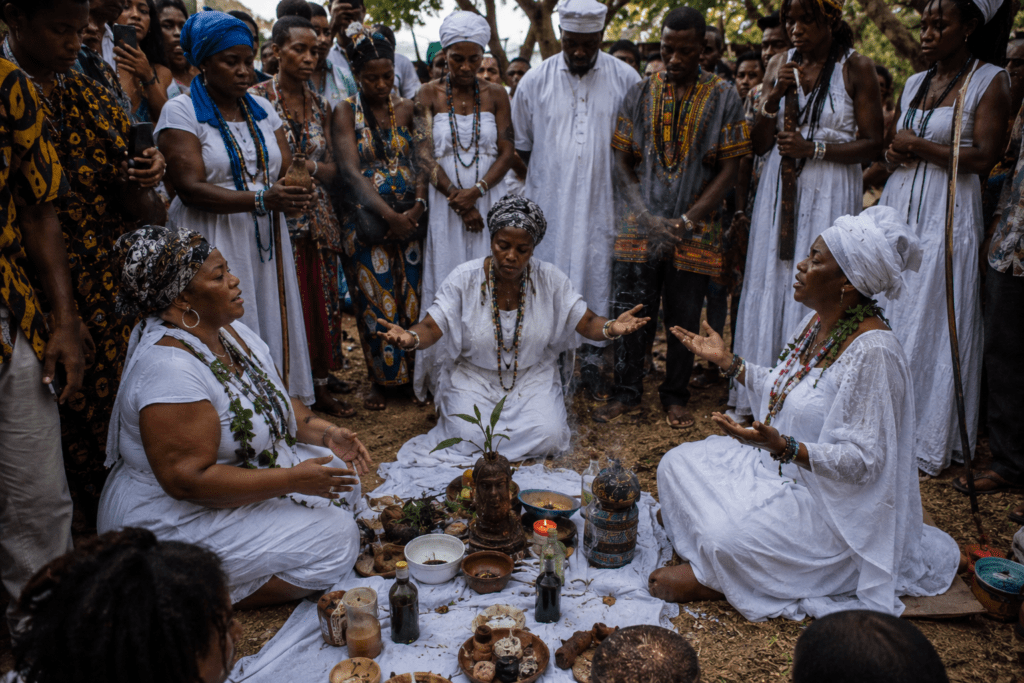
Christians have often been accused of being intellectually lazy, and the concept of a true God has been termed a “God of the gaps.” But really, which one is created to fill the gaps? The real question is whether humanity’s countless idols and the many ideologies, philosophies, and self-made systems that seek to take the place of God are not themselves attempts to fill the vacuum left by rejecting God. The question isn’t merely whether people believe in God to explain what they don’t understand. The deeper question is whether humanity creates substitute gods to satisfy needs that only God was meant to satisfy. Cultures, with their many inventions, have tried to satisfy these needs for years: identity, meaning, moral direction, purpose, love, belonging, and truth. Sadly, all their attempts have instead created even more unanswerable questions. Philosophy, science, and tradition have tried to provide answers to these questions, yet the deeper we searched, the deeper we plunged into the deception of philosophical and scientific supremacy. The idea that human reason is enthroned above biblical revelation, human wisdom judging divine wisdom, and autonomous thought replacing dependence upon God is a great deception. These concepts are deeply embedded in both ancient and modern cultures after the order of Cain, the philosophical foundations of Babel, and the remnants of Babel’s systems still found in cultures around the world.
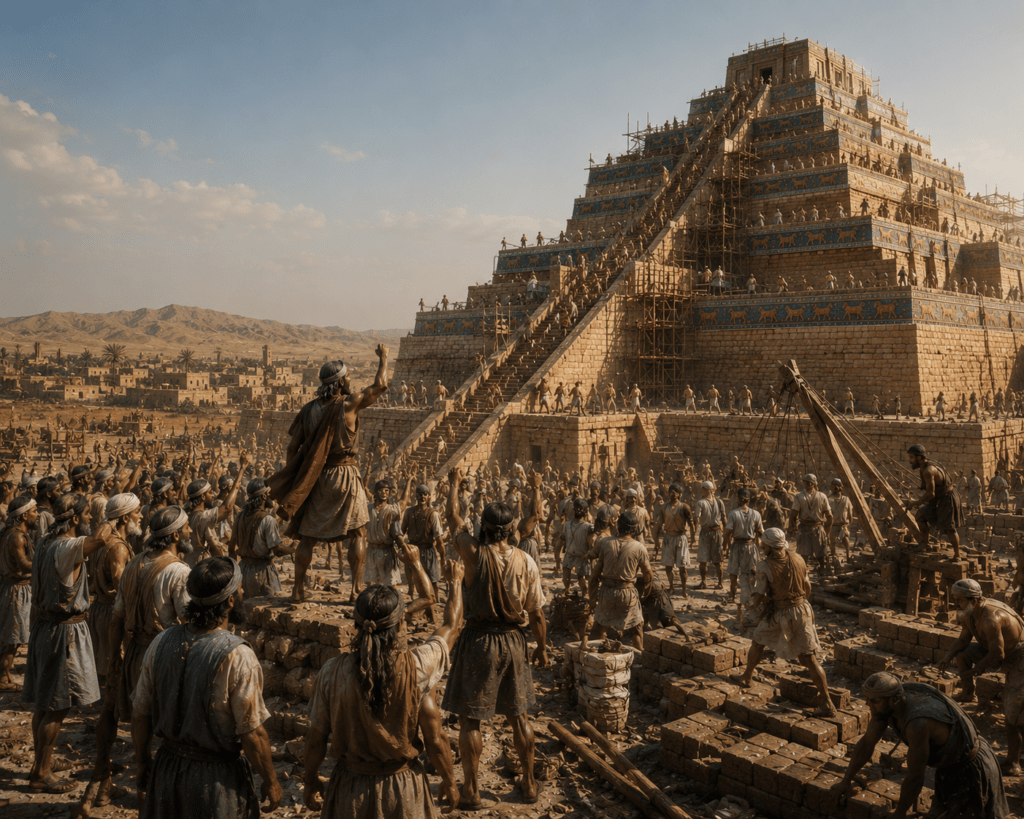
The story of Babel is a perfect representation and figure of what we have today in our world. One man introduced an ideology, a philosophy of life that was completely contrary to the God-ordained way of life. He, Nimrod, and his sympathisers rose up against the government of God and the revealed truth of His wisdom, power, and nature. They started questioning His wisdom and authority despite what had been clearly revealed. Some asserted that natural causes were the reason for the Flood, while others created fables and a number of gods and ascribed the event to them. This rebellion is still evident in many cultures throughout the world, in traditional stories, in cultural customs, and in the philosophical basis of modern education.
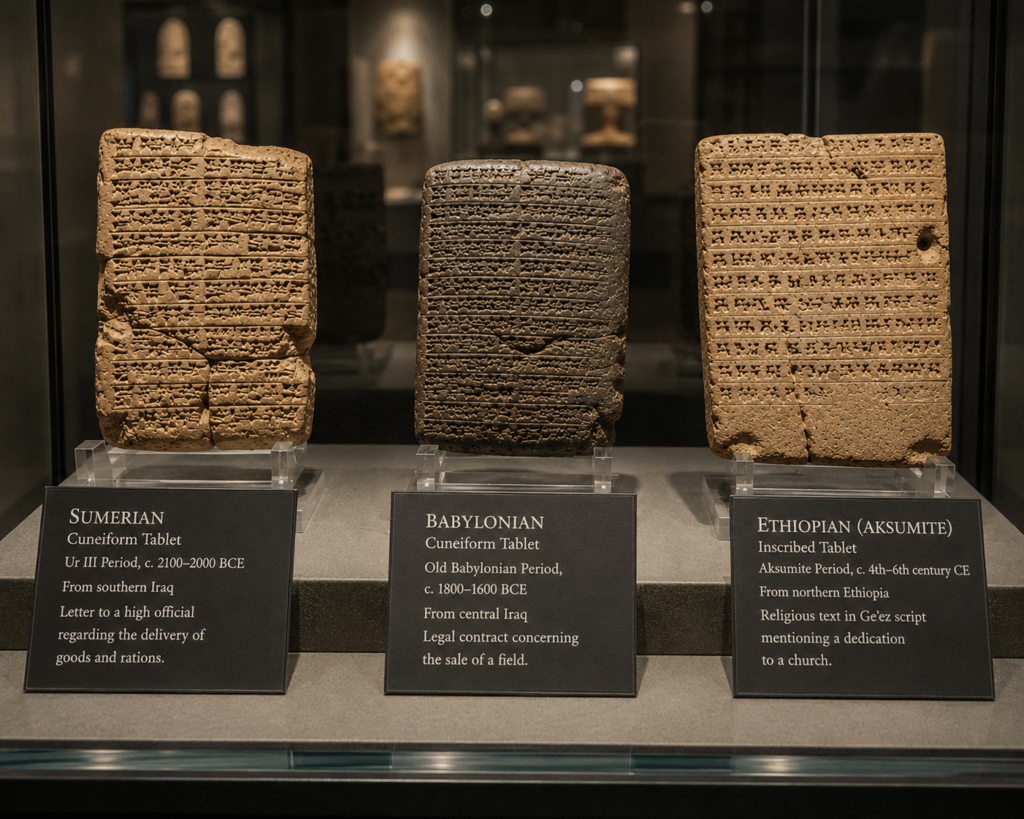
Culture itself is self-centered and biased by nature. Each culture is fundamentally built to accommodate the specific group that lives by it; hence, when you visit another culture, you have to learn their ways and suspend your own. In some cases, this is a matter of life and death. Since cultures are human creations, and humanity is fallen, cultures inevitably reflect the limitations, preferences, and biases of the groups that create them. It is worth noting that in every culture there is an element of truth, simply because, though fallen, mankind has preserved some fragments of truth. The problem is that it is distorted and mixed with error. This is the very definition of deception. A deception is usually persuasive because it contains enough truth to appear credible. Seeing that humanity descended from a common origin and retained fragments of truth, it would make sense for traces of truth to appear in cultures around the world, even where those truths have been altered, distorted, or mixed with error. A culture may preserve a truth, misunderstand it, distort it, embellish it, or misapply it. We see this clearly in both the story of Creation and the story of the universal Flood. Stories such as the Babylonian creation account, the Enuma Elish, the Sumerian account, the Eridu Genesis, and universal flood stories such as the Atrahasis and the Epic of Gilgamesh, not to mention the numerous other similar stories from different cultures. These clearly show the deception woven into identity. These stories are almost illustrations of this deception. They contain recognisable parallels while differing significantly in details and interpretation. They preserve fragments of a common memory while simultaneously revealing distortion, embellishment, and error. Erroneous ideologies concerning God, social relations, identity, truth, and love are inseparably rooted in the different cultures around the world. And since we identify with our cultures, these deceptions have become deeply ingrained in our identities. There is a serious transformation that ought to take place at the fundamental level of our cultural concepts and practices. And this is one of the greatest challenges we are facing, because attacking these beliefs, customs, and norms is perceived as an attack on our very persons. People can often examine ideas objectively when those ideas remain external to them. But when an idea becomes part of identity, criticism of the idea feels like criticism of the self. This is why discussions about culture, religion, politics, race, tradition, and identity often become emotional very quickly. People are no longer defending a proposition; they feel they are defending themselves. Yet the problem is that, no matter how aggressively one may defend an erroneous claim, it does not make it right, nor does it change the outcome of that claim.
How, then, are we to judge truth? How are we to differentiate between truth and error? Humility is a prerequisite for finding truth. Self-denial and surrender are necessary on the path of truth. Christ declared, “I am the truth.” (John 14:6). He further stated, “Thy word is truth,” (John 17:17) referring to the Holy Scriptures of the Bible as the standard of truth. Ellen G. White writes: “The word of God is to be our guide, not the opinions or ideas of men..1 The Word of God is the great detector of error; to it we believe everything must be brought..2 We must study it reverentially. We are to receive no one’s opinion without comparing it with the Scriptures..“3 Truth is not to be judged by culture, tradition, opinion, identity, philosophy, science, or the ideas of men, but by Scripture. “Beware lest any man spoil you through philosophy and vain deceit, after the tradition of men, after the rudiments of the world, and not after Christ.” (Colossians 2:8). Throughout the ages, deception has necessitated that the Holy Scriptures of the Bible be removed or misinterpreted. Since the Holy Scriptures are the discerner of all things true or false, it is only plausible that, in inventing a lie, one must first attack and nullify the credibility of the Bible.
The Scriptures are the light. Albert Barnes, speaking of the light, says the following: “Light” is that by which we see objects distinctly. The light of the sun enables us to discern the form, the distance, the magnitude, and the relation of objects, and prevents the perplexities and dangers which result from a state of darkness. Light is in all languages, therefore, put for “knowledge” – for whatever enables us to discern our duty, and that saves us from the evils of ignorance and error. “Whatsoever doth make manifest is light, Ephesians 5:3”…. The Word of God is the light. Christ, who was the thoughts of God made audible, the One who came to perfectly demonstrate this Word and was its embodiment, declared of Himself, “I am the light of the world. John 8:12.”4 Again, Barnes comments on this subject: “I am come a light into the world.” The meaning is, that the λόγος Logos or Word of God is the “instructor or teacher” of mankind. This was done before his advent by his direct agency in giving man reason or understanding, and in giving his law, for the “law was ordained by angels ‘in the hand of a mediator’” Galatians 3:19; after his advent by his personal ministry when on earth, by his Spirit, John 14:16, John 14:26, and by his ministers since, Ephesians 4:11; 1Corinthians 12:28.”5 The Scriptures, then, are to be our standard of truth. Whether it be science, philosophy, or any discipline or ideology intended either to educate or govern a society, it should be tested and proven by the Word of God. I will not, in this exposition, attempt to defend or provide evidence for the credibility of the Scriptures, though I hope to do so in the future.
References
- Ellen G. White, The Review and Herald, March 25, 1902, par. 8.
- Ellen G. White, Letter 20, 1888, par. 20. (Manuscript Releases and Letters, Vol. 5 database citation: 5LtMs, Lt 20, 1888, par. 20)
- Ellen G. White, Letter 20, 1888, par. 20. (Manuscript Releases and Letters, Vol. 5 database citation: 5LtMs, Lt 20, 1888, par. 20)
- Albert Barnes, Notes on the New Testament: Explanatory and Practical, Commentary on John 1:4 (“The life was the light of men”)
- Albert Barnes, Notes on the New Testament: Explanatory and Practical, Commentary on John 1:4 (“The life was the light of men”)