Made to Know and Be Known: Depths of Life Unexplored
Mankind was made to be a recipient of infinite knowledge. We were created to be the receivers and reservoirs of the infinite ocean of wisdom and to partake of the ability to discern the processes of the universe and intimately know the essence of all creation. We were originally made with minds that could penetrate the mysteries of creation without the struggle that we experience now. The human mind was designed to explore the recesses of God’s mind, to know Him through shared experience with Him. Our hearts were to be in unbroken, constant communion with His. The depths of knowledge to which we were to have access were measured only by the degree of intimacy man had with the Infinite One. Mankind has left unexplored more than mere factual knowledge. We have lost more than information and intimate pleasures; our very mental capacity has been greatly reduced, our faculties enormously limited. Sin has robbed us of more than our minds can comprehend. What depths of love, what wonders of knowledge, have we missed? And what remains yet unfolded? It is here that both fallen men and angels completely missed the point and continued in the delusion. We have convinced ourselves that there is something better, something greater, something more desirable than what God has provided and offers. One of the greatest deceptions is the belief that God’s law of love deprives us of bliss and freedom; the idea that God’s will and way are limitations and unnecessary restrictions on our path to transcendence. It is the notion that, in Christ, our minds are stifled and that we are brainwashed. The concept that true happiness is found apart from God as opposed to being one with Him, that the law of love, the very source of joy and fulfillment is its restriction and hostile to it, is a deadly fallacy of all times.
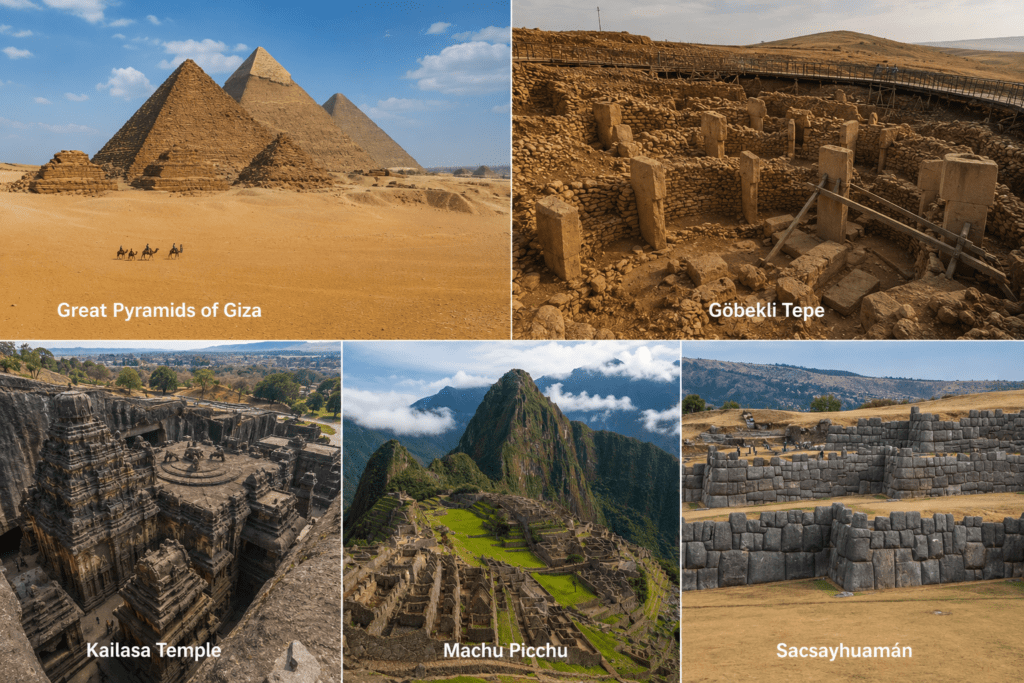
We marvel at the inventions of the ancients, not merely from a point of awe and admiration for their wisdom and knowledge, but more so because we have falsely concluded that ancient men were primitive, unintelligent, and mentally inferior—the so-called hunter-gatherers. When we look at the Great Pyramids of Giza, Göbekli Tepe, Kailasa Temple, Machu Picchu, Sacsayhuamán, etc., we look at these magnificent, beautiful human constructions as if they were produced by minds from another world. Yet these constructions are nothing in comparison with the mental and creative power with which God endowed man. These marvels of human ingenuity left behind by the post-Flood race give us but a taste of what we lost. It is not merely the loss of human ingenuity in architecture, engineering, mathematics, artistry, planning, and organization that we are to mourn, but also the loss in literature, agriculture, astronomy, and technology—the kind that is a window into the Divine mind and love. Of how much mental capacity, intellectual sphere, and relational knowledge and experience has sin robbed us? O the depths of life left unexplored.
The most fascinating thing about the gift of life as it proceeds from the Giver is not its intricacy but its simplicity, its beauty, its purity, and its holistically fulfilling qualities. The depths of life from which we were originally made to partake were never merely informational but the experiential knowledge of the very essence of the Divine One. We were originally created to explore love in all its different facets. The depths of infinite knowledge, infinite understanding, and infinite wisdom were ours to explore, without any mental or circumstantial limitations. The creative power and the beauty of holiness were to be subjects of experimental science, humanity was not merely created to know facts, but to participate in an ever-deepening experience of God’s character, wisdom, beauty, and love. Presently, these are very rare experiences. Even when we do taste of them, they are very shallow and intermittent. We can perceive that there are depths, beauty, and pleasure beyond what we have ever known, but we know not how to access it all. As a result, we attempt to construct paths and methods, but none ever work.
Through it all, humanity was also to freely express themselves. As they received from their Creator, they were to experiment and present their findings and experiences. A mutual exchange of personal perspectives and heart contents was to be the colour of life. This reciprocal relationship was to serve as a platform for growth and development in the knowledge of God. Mankind was to constantly develop the mental, physical, and spiritual powers in the likeness and image of God. We were to drink from the everlasting streams of divinity, to be partakers of the divine attributes, not as gods but as the children of God. This is an offer that still stands. Mankind is invited to partake of divinity. To have the finite mind commune with the Infinite is the will of God. He calls us, “Come, let us reason together…” “Call unto me, and I will answer thee, and shew thee great and mighty things, which thou knowest not.” This is the essence of life, that we may know God and be known by Him, though He already knows us, yet He longs to know us from a personal point of view, through our own voice. All the academic disciplines combined contain but just a drop in the ocean of what is written on the pages of nature and the universe. Though they observe and try to tell us how things have always been or function, none of them really gives us the reason of things in purity. These do not soundly communicate the understanding of the ultimate meaning, purpose, or reason of things. What God offers us is His heart, and what He asks of us is our hearts. In all of the sciences there is a piece of His heart and mind, and of this we have not yet explored as we ought to. Yes, we have but just grappled with the surface, and even that is still, to a great extent, not clearly and fully understood. All of the data contained in nature is a note intended to impart the knowledge of God. Every genuine pursuit of truth, every legitimate field of inquiry, will, in some measure, bring us face to face with a revelation of the character and thought of God.
Life as it comes from the Giver is eternal by nature, but the rejection thereof is death. The very fundamental principle of life is the “knowledge of the true God and Christ whom He has sent.” To know someone requires communing with the individual; so it is with God. An ongoing, unbroken communion, coupled with the gift of faith, is the hand by which we receive this knowledge. O, how I wish I could say all that is in my heart. I have spoken of these things, but the reality itself is greater than anything I can communicate. It is only when we personally draw toward Him that we are to drink of the fountains of everlasting water. The joy, the pleasure, and the depths in all things pertaining to life and godliness are found in the revelation of what is in the heart of God, His Word, even Christ, of whom the Scriptures testify.