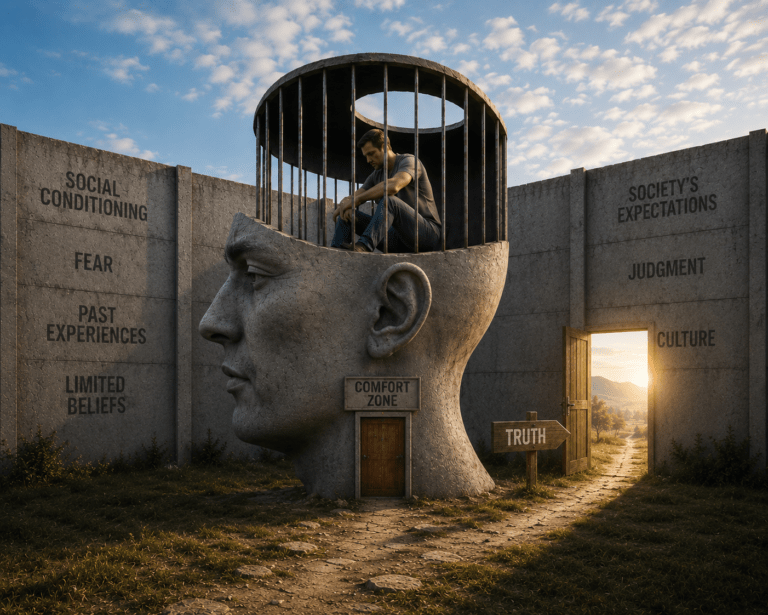
The Complexity of the Human Mind and the Struggle for Interdependent Relationships
Humanity’s Relational Design

We are relational beings, created specifically to exist in loving relationships. Our very makeup attests to this truth: we emotionally, intellectually, and spiritually thrive in love-filled environments. Anything contrary to this is hostile to our health and well-being. There is no question that love is central to our existence. Inherently, we are drawn toward love; we deeply yearn for kindness and compassion. Prior to the fall of humanity, we were created to dwell in the fullness of joy and partake of eternal pleasures: “Thou wilt shew me the path of life: in thy presence is fulness of joy; at thy right hand there are pleasures for evermore.” Psalm 16:11. We were never created to experience hostile thoughts or feelings. Our biological and psychological makeup was in perfect harmony with goodness and love; there was nothing within us contrary to the nature of God. Our minds are governed by principles such as the need for self-expression, acknowledgment, appreciation, and belonging, all of which are social needs deeply embedded within our nature. These are not accidental, nor are they merely traits developed for survival; they are part of our very identity. The need to love and be loved is central to who we truly are.
Love is essential both for our preservation and development. Without genuine love, which nurtures our optimal health and well-being, we deteriorate biologically and psychologically. Scientific observation increasingly shows that loving relationships are deeply connected to human health and longevity, while chronic exposure to loveless, hostile, and traumatic environments contributes significantly to psychological deterioration, disease, and even premature death. Due to the fall of humanity, many destructive conditions entered our social environments—pride, lust, trauma, and above all selfishness, which stands in complete opposition to the character of the ideal human being. Furthermore, many forms of psychological suffering, such as anxiety and depression, became deeply intertwined with human experience.
The Fall and the Complexity of the Human Mind

The introduction of experiences foreign to humanity’s original design resulted in profound biological, psychological, and spiritual disruption. Our minds became disordered, and our thoughts increasingly disharmonized from the will of God, producing confusion, inner conflict, and inconsistency within human life. To a great extent, these conditions greatly complexified human existence and relationships. Life, originally, was meant to be simple in operation yet complex in nature. Human beings were designed to understand one another and thereby build thriving, love-centered communities; neighborly love was meant to come naturally. Today, this has become exceedingly difficult. Even when two people genuinely love one another, misunderstandings remain inevitable, and misinterpretations of personality and deeply seated intentions have become normal. Faulty upbringing, distorted education, cultural biases, and personal traumas have become central lenses through which many of our mental processes operate. No longer are love and the will of God central to human life; instead, survival and self-preservation have become dominant.
Much of the complexity of the human mind is now shaped by the accumulated consequences of sin. These distortions cloud human understanding and greatly complicate existence; the misinterpretation of the nature and purpose of life has become deeply embedded within human experience. Our struggle to love one another impartially and our conflict with the idea of interdependent relationships often spring from deeply seated fears of repeating past experiences and from our desire for self-centered autonomy. Furthermore, and perhaps at the very core of the problem, lies selfishness and the relentless pursuit of self-preservation.
Fear, Vulnerability, and Relational Conflict

Vulnerability is a prerequisite for love and a vital ingredient in healthy interdependent relationships. Yet, for the sake of emotional security and out of fear of repeating traumatic experiences, we not only discard vulnerability but often resist the emotional, psychological, and relational harmony necessary for genuine human connection. This resistance and disharmony often manifest themselves in forms of conflict and disagreement rooted not in truth itself, but in misunderstandings and misinterpretations of one another’s perspectives, beliefs, and expressions. Due to childhood experiences, distorted education, cultural biases, and past traumas, we frequently misread and falsely judge one another’s intentions and perspectives. This relational mayhem is further intensified by a lack of humility. By nature, we are deeply self-centered and relentlessly driven toward excessive self-preservation. Selfishness, rooted and manifesting itself through pride—one of the most difficult traits to overcome—becomes one of the defining characteristics of fallen humanity.
Christ is the epitome of love. In Him we see the perfect example of interdependent relationship as it exists within the Godhead. He came not merely to heal us individually, but to restore the human relational dimension itself. In Him we behold humility in ways humanity had never witnessed before: the Monarch of the universe, dwelling in purity and holiness, humbled Himself to the level of fallen humanity—His own creatures—and condescended to dwell in a world filled with impurity and moral corruption. Driven by infinite love, He became vulnerable and exposed Himself to His enemies, subjecting Himself to their scorn, rejection, and attacks, even unto the death of the cross.
He is the restorer of our minds, the harmonizer of our thoughts with the will of God, the regulator and subjector of our affections and appetites to reason and truth, and therefore the healer of our hearts and the restorer of our relational nature.