Babylon: An Ancient Worldview in Modern Minds
The Rudiments
At the very foundation of every mental disposition lies a worldview. Each one of us has inherited an integrated philosophical and foundational system of beliefs and assumptions through which the mind perceives, interprets, evaluates, and responds to reality. We have a way in which we see and understand the world. Interestingly enough, though in a special sense each individual has a unique way of viewing the world, there is also a generic way in which certain groups in our societies view the world. Beliefs and assumptions are vital elements in understanding the anatomy of worldviews; they also serve as foundations for our mindsets. We all have beliefs, either theories or philosophies we are convinced are true, some based on evidence and some on mere conjecture, and these beliefs become the axioms of our lives; we live by them, and we would die for them. All beliefs are handed down to us either as explanations of reality and its operations or as explanations of human experience. All worldviews are inherited in one way or the other. No man alive has, by the might of his mind or his wisdom, originated any belief. As I mentioned in my previous work, The Formation of Character, all information is from two external minds. Since all worldviews are first and primarily information, none of them is originally from us. Now, apart from the primary sources, which I will mention later, these worldviews are handed down to us by our parents, culture, religion, education, society, and personal experience.
Every worldview began as an explanation of reality. A certain mind, inspired by either God or Satan (the two primary sources), articulated a set of principles by which reality was explained, interpreted, and understood, often with respect to a particular field or aspect of reality. Today we can rightly say in a specific field of science, though science is here used in its literal meaning, that is, knowledge, understanding, learning, or skill. Knowledge is acquired through communion, either in the form of inspiration, revelation, teaching, or observation. In the context of this exposition, it is very important to know and understand that up until around the 17th century, the word science simply meant knowledge or learning of any kind. Theology, philosophy, mathematics, medicine, law, etcetera, could all be called sciences, and whether this knowledge was acquired through formal or informal education was irrelevant; hence, most of the fathers of science were not necessarily formally educated. Only during the Scientific Revolution did the word gradually become restricted to systematic knowledge of the natural world obtained through observation, experimentation, and rational investigation. It would be wise to also note that inspiration comes in many forms; therefore, God and Satan are not limited as to how or through which agency they impart knowledge. For the purposes of this exposition, I used the term “fathers of science” in its literal sense, referring to those who first contributed knowledge in any field, not merely to the modern figures traditionally associated with the rise of experimental science. Adam was a scientist because he acquired and exercised knowledge. Noah possessed scientific knowledge of shipbuilding. The antediluvians developed metallurgy, agriculture, animal husbandry, architecture, and music. Ancient Egyptians possessed scientific knowledge. Ancient Babylonians possessed scientific knowledge. Indigenous societies possess scientific knowledge without formal institutions.
The battle of worldviews

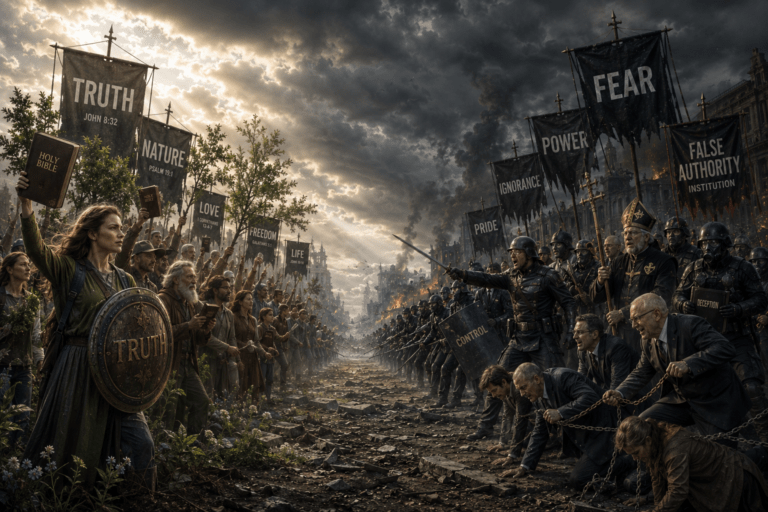
Since the dawn of time, there was a clash of minds. In the beginning, up to the present, two opposing theories have been in a great controversy. Two brothers, one believed that mankind is created by God, sustained by God, has sinned and is redeemed by God; another brother, though he believed in the Creator God, failed to believe in His sustaining and redeeming power. Instead, he believed that man was his own sustainer, generator of righteousness and, if need be, redeemer. Cain and Abel were the brothers. It is worth noting that it was not these two who began the controversy but rather they were willing participants, willing intelligent agents.
Cain and Abel did not invent the two competing systems of thought—they received them and chose between them. Now, throughout the ages, these two worldviews grew and branched out, developing many other theories but can still be traced down to these two. One believes and is firmly grounded in a loving God who created the universe, who sustains His creatures, redeems His people, and has revealed Himself in His Word and the person of Jesus Christ. The other believes and is grounded in self, seeks to sustain and exalt self, and works to produce his own righteousness.
Babylon the Ressurector of Ancient Fallacies
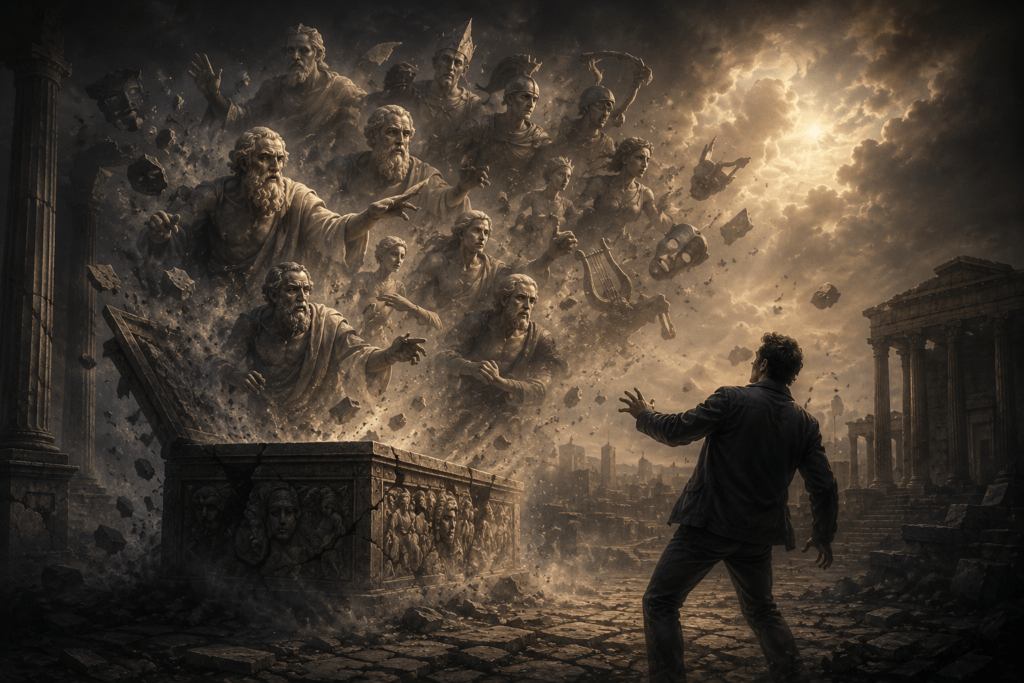
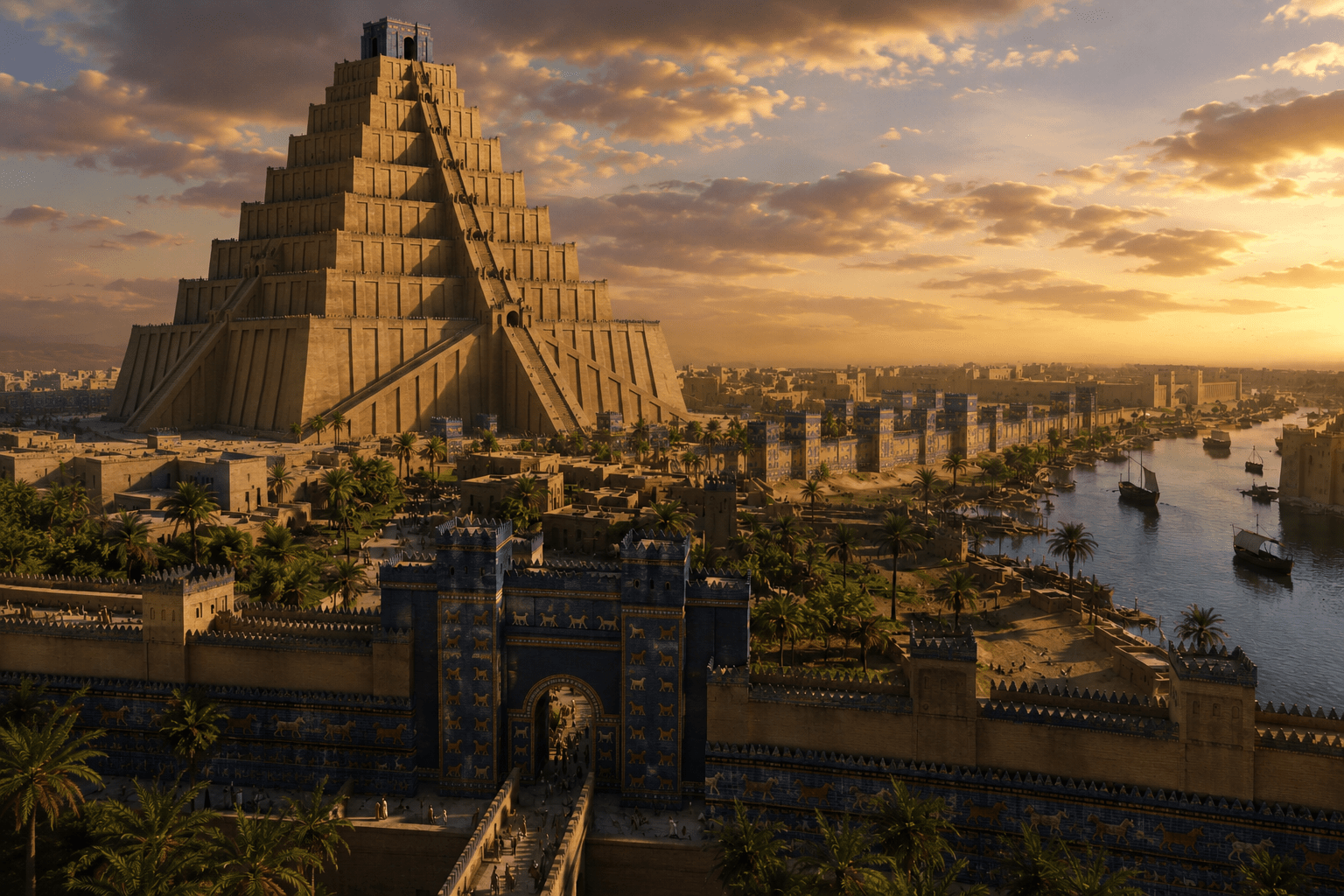
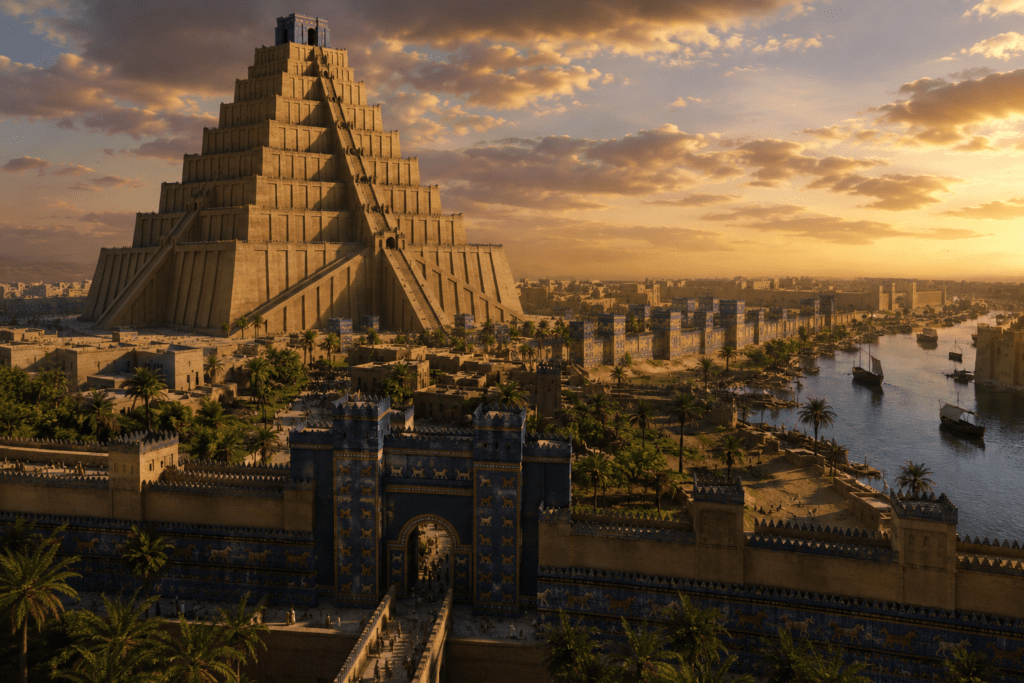
It was during the time of the patriarchs, when the remnant of man still possessed the knowledge and wisdom of old, when there was no need of writing, for man still had almost a perfect ability to remember. When the memories of the Flood were still fresh in the minds of the dwellers of the earth, it was Nimrod, the mighty leading rebel, the first political campaigner, the hunter of man, and the opposer of truth, who, after the example of Cain, built cities, great centers of education. “Nimrod was not simply a mighty hunter of beasts, but also a persecutor of men. And the power which he had acquired… he used to compel people to recognize his power1… And the beginning of his kingdom was Babel, and Erech, and Accad, and Calneh, in the land of Shinar. Out of that land went forth into Assyria, and built Nineveh, and the city Rehoboth, and Calah, and Resen between Nineveh and Calah: the same is a great city.”2 He revived and reestablished the worldview of self. It was in his time that the many false systems of thought were reorganized, unified, and propagated from Babel.
During this time, Babylon, also known as Babel, became a symbol of rebellion against the Kingdom of Heaven, the government of God. Thus, in Nimrod was established the principle of earthly government in opposition to the government of God. It was in this great city that the people were not separated by race or tongue; they did not see color, and they spoke one tongue. All were of one mind, under the leadership of Nimrod, whose very name is believed to come from a Hebrew root meaning “we will rebel” or “let us rebel.” They were all united under one belief, that God was not to be their ruler, that they would not bow before His throne. “The dwellers of the plain of Shinar established their kingdom for self-exaltation, not for the glory of God… Their confederacy was founded in rebellion; a kingdom established for self-exaltation, but in which God was to have no rule or honor.”3 Thus, “The men of Babel had determined to establish a government that should be independent of God.”4 From this city sprang many theories, such as that the Flood was not caused by God but was a simple phenomenon of nature, and another, which was that if God ever destroyed the world with a flood again, they would climb up to the heavens and therefore deliver themselves from His hand. “Many of them denied the existence of God and attributed the Flood to the operation of natural causes… Others believed in a Supreme Being, and that it was He who had destroyed the antediluvian world; and their hearts, like that of Cain, rose up in rebellion against Him. One object before them in the erection of the tower was to secure their own safety in case of another deluge.”5 These were a few core beliefs found in ancient Babel. From this city, thousands of false belief systems trace their roots. Biblical history and archaeological discoveries confirm this fact.
The spread of an Ancient philosophy
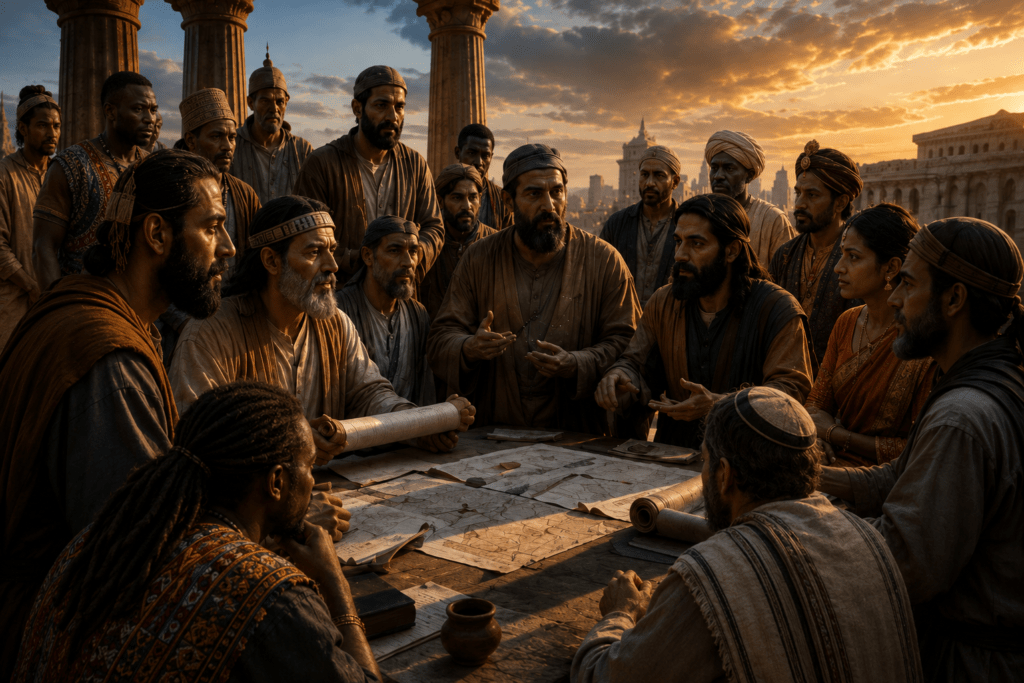
When God confused the tongues, or the languages, of the Babylonian inhabitants, and the dispersion of the nations began, “After the dispersion from Babel idolatry again became well-nigh universal, and the Lord finally left the hardened transgressors to follow their evil ways…”6 The belief systems that were revived and reestablished in Babel spread and filled the whole earth. We see these different beliefs written on stone, buried until the rise of archaeology. From ancient Egypt, Ethiopia, the Aztecs, the Mayans, to the Incas, we see the remnants of ancient Babel. The philosophy of Babel never died; it continued to live on throughout the ages. It developed many branches and has been embodied by many nations, institutions, and minds. Every nation and every man that rejected the government of God since the beginning of time carried on the legacy of Cain and Nimrod; every theory that sowed the seeds of any principles other than the principles of Heaven perpetuates the worldview of Babylon.
Philosophy was also regarded by the ancients as a system of knowledge and wisdom, a way to understand reality and live right, though many claimed to have the correct philosophy of life, the philosophy of Babel has been the foundation of all the philosophies which, even in the slightest, showed hostility towards God and truth. In ancient Egypt, they believed in life after death; so did many other nations. They also believed in many gods and, most notably, in the deification of Pharaohs. These and other similar beliefs we see throughout the world. Astrology is one of the most common beliefs in many nations around the world. All these beliefs are contrary to the truth, echoing the ancient worldview: man is his own source of wisdom, a self-sustainer, and can generate his own righteousness, needing no Redeemer; he is a god and never really dies, therefore is eternal. These are the echoes of Babylon. Babylon is not merely an ancient civilization but an enduring worldview that continues to manifest itself in human minds, cultures, and institutions.
An Ancient Worldview in Modern Minds

Babylon is a system of thought, an organized rebellion against God. It is a combination of confused human ideologies and a false system of worship. Today it dominates the world, well reorganized and structured, with the Papal system, or Rome, upon its throne. Every institution that agrees with this system of thought serves as an agent to complete the ancient tower of rebellion. The education system, the pharmaceutical industry, the agricultural industry, the political system, the ecumenical movement, the entertainment industry, the LGBTQ movement, and many others become builders of that tower wherever they embody Babylon’s principles. All are the builders of the ancient tower and the Nimrodians. Wherever the principles of self-exaltation, self-sufficiency, rejection of God’s authority, or false worship prevail, the worldview of Babylon is manifest. To be more precise, “The term Babylon is derived from Babel, and signifies confusion. It is employed in Scripture to designate the various forms of false or apostate religion7… Babylon is the name of the symbolic harlot which was seen by John… We understand, therefore, that Babylon is not limited to a single ecclesiastical body; but that its very name renders it necessary that it should be composed of many.”8
What then? Modern Babylon is not confined within the walls of religious bodies in the strict sense of the word, as it is generally used. Babylon is first a worldview before it is a religious system. Since every worldview produces a philosophy of life, and every philosophy of life expresses itself in conduct, Babylon is manifested wherever its principles govern the mind and direct the life. Interestingly enough, in the Bible, true religion is defined as a lifestyle that reflects the mind and heart of God. Babylon, then, is the opposite in that it reflects the mind and heart of Satan. Today, we see this mindset everywhere—in every system, every movement, and every institution that advocates this philosophy, which is contrary to truth and hostile to that which is natural according to God’s created order and design. It is clearly evident that there is a power working against the health and well-being of humanity in every aspect of life. This power manifests itself through the setting of human minds, and since the operation of our minds is expressed through our words and deeds, we see this antagonistic power revealing itself in our ideas of what constitutes a conducive environment for our health and well-being. The worldview that exalts human wisdom and promotes self-indulgence is not for our good, and this is the leading worldview in our world today.
Mystification

Both the atmosphere and the nature of a society are a combination of the characters of which it is composed. Our beliefs are the foundation of our social state. The confusion that we see in our communities, children not having sound concepts of their identities and roles, parents compromising principles to indulge their children’s inordinate desires, schools bending to the agendas of higher authorities by introducing unscientific theories as facts, and the many other issues in our societies are evidence of our disoriented mental states. Our thinking is not in harmony with God’s ideal order and purpose. There is a deep-seated rebellion against truth and righteousness in every fibre of human nature, and we willingly bow to the leader of this rebellion.
This mind, a mind that in its operations is inclined toward principles or standards that are beneath the standard of truth as it is in Christ, the Word of God, is not beneficial to humanity. It is an ancient worldview that originated in the mind of the great rebel, Lucifer, and has been passed down from generation to generation since the days of Cain. It was during Nimrod’s time that this ancient worldview was revived, unified, and reorganized into a powerful civilization on the plains of Shinar, a place that became known as Babel. Lucifer is the father of the same philosophy that spread throughout the world after the dispersion of the Babylonians, and as we speak, its principles are being reproduced and reorganized in modern minds, causing havoc in the world. From the ideas we have of the origin of life, the purpose of existence, what constitutes a morally right and healthy lifestyle, what constitutes good and evil, what love is, and many other concepts, we can see not only confusion but also enmity toward God and rebellion against His law, both the moral and the natural law. The fact that we destroy our very habitation with strange chemicals and greed, which lead to the destruction of the environment and the soil through harsh chemicals, demonstrates the effects of the Babylonian philosophy, not to mention self-destruction through entertainment, the love of pleasure, pride, inordinate desires, and unbridled passions.
So what? Though we are now wallowing in the mud of Babylonian confusion, though we are bombarded with Babylonian philosophies at every corner, there is still light shining from the truth. There are principles purer than gold, tried seven times, exalting and ennobling in their effect. We know now that every person can be transformed by the renewing of the mind, that these false and dangerous ideologies and theories of Babel, clothed with the garb of human progress and evolution, can be subdued and overcome by the truth. I cannot emphasize this enough: Christ is the remedy. To have the same mind that He has is the only solution. Christ came not merely to pardon the guilty but to restore the image of God in humanity. He came to renew the mind, to establish truth where there has been confusion, light where there has been darkness, humility where there has been pride, and love where there has been selfishness. The principles of Heaven do not merely inform the intellect; they transform the whole person.
Every civilization is built upon a worldview. Every worldview begins in the mind. Every mind serves a master. In the end, there are only two kingdoms, two philosophies, and two destinies. The choice before humanity has never changed. It is the same choice that stood before Cain and Abel, before the builders of Babel, before the prophets, before the apostles, and before us today. The great controversy has always been a controversy of the mind. Before it is fought in nations, institutions, or civilizations, it is fought within the individual heart. Every man and woman must ultimately choose which voice to believe, which principles to cherish, and which kingdom to serve. The question has never merely been, “What is Babylon?” The question is, “Whose mind governs mine?”
References
- Jones, A. T. General Conference Bulletin, vol. 2, January 1, 1897, p. 14, para. 4.
- Genesis 10:10–11 (KJV).
- White, Ellen G. Testimonies for the Church, vol. 8, p. 213, para. 3.
- White, Ellen G. Patriarchs and Prophets, p. 123, para. 1.
- White, Ellen G. Patriarchs and Prophets, p. 119, para. 1.
- White, Ellen G. Patriarchs and Prophets, p. 125, para. 1.
- White, Ellen G. The Great Controversy (1888 ed.), p. 380, para. 3.
- Andrews, John Nevins. The Three Messages of Revelation 14:6–12, p. 43, para. 2.